
Have a Question?
Science Outcomes and Skills in Crime Investigation
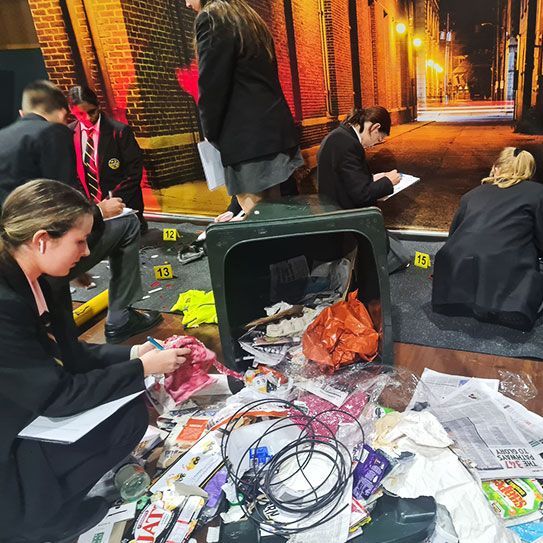
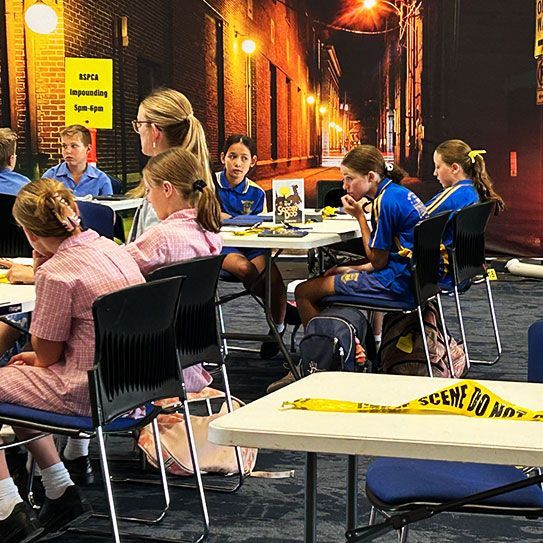
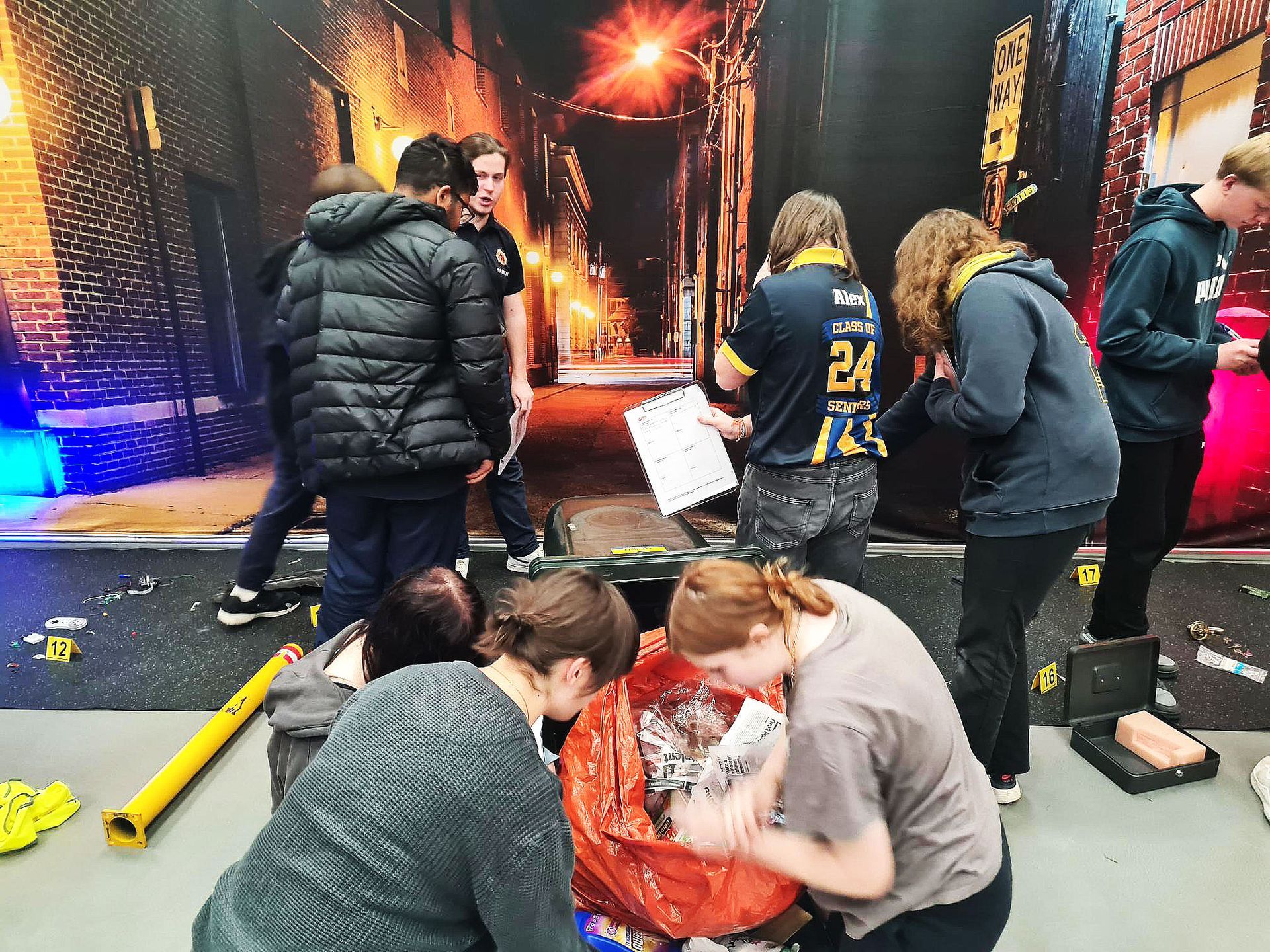
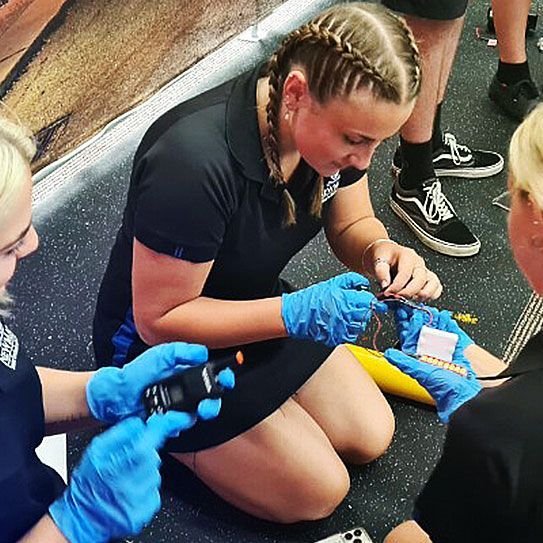
Our workshops for Year 7 to HSC students offer an engaging, hands-on approach to applying scientific principles in a crime scene setting. Tailored to your school’s needs, the program builds on existing knowledge through an immersive, hands-on experience like no other.
Enhance Scientific Skills with an Immersive Crime Scene Investigation
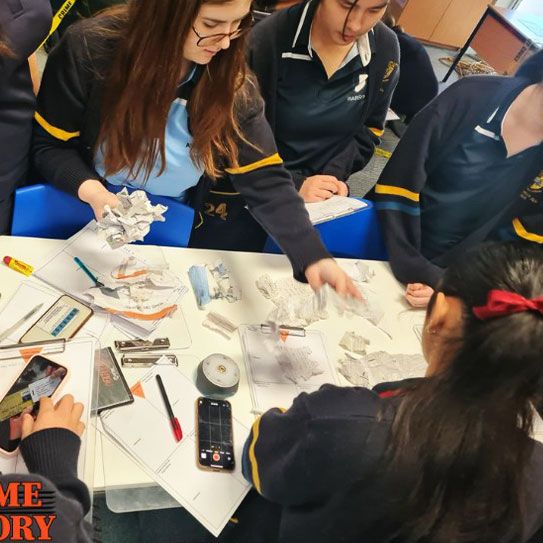
Crime investigation is a scientific process, and the skills developed in High School Science play a vital role across various fields. Our workshop delivers a unique, hands-on opportunity to apply scientific principles within a crime scene context, tailored to your school’s specific needs. Through this immersive experience, students will not only strengthen their understanding of science in a practical and engaging way but also develop and hone skills essential for their Student Research Project.
Workshop Highlights
Trauma-Free Crime Scenes
All scenarios are carefully designed to be trauma-free, focusing on scientific analysis and fostering student creativity.
Real-Event Evidence
Our evidence and crime scene scenarios are based on actual events, allowing students to apply their scientific knowledge to real-world situations.
Skills and Evidence Analysis
Observation Techniques
- Scene Observation using 4WS (identifies questions and problems for testing and researching)
- Differentiating between evidence and information
- Interviewing techniques using 6WS (matching scientific data with non-scientific evidence)
- Other techniques using 7WS (first hand investigations tested against secondary sources)
Scientific Analysis
Paint Chips: Geology and microscopy analysis
Soil and Gravel Samples: Geology and chemistry testing
Fingerprint Analysis: Bichromatic methods
DNA Analysis: Swabbing and testing
Trace Elements: Oils, organic/inorganic materials, and simulated hair
Ballistics: Gunshot residue (GSR) simulations, shell casing analysis
Fabric and Material Testing: Examining gloves, clothing, metals, and porous materials
Electronic and Digital Evidence: Analyzing CCTV footage, mobile phones, electrical circuits, and more
Identification and Documentation: Examining IDs, typology, ink, and handwriting
Special Requests (Optional Add-Ons)
- Blood splatter pattern analysis
- Mannequin victim setup (Note: Both options may be triggering for some students)
- Mannequin - Ballistics Trajectory Modeling
What People Are Saying
Feedback from our students, educators and event organisers.
Through this immersive program, Crime Story offers a distinctive and impactful learning experience, bringing scientific theory to life in a way that is both meaningful and memorable.
What Sets Us Apart
Experiential Learning
Students engage deeply with the investigative process, continuously re-evaluating evidence, refining their understanding, and applying scientific methods.
Comprehensive Skill Integration
Our workshop connects evidence to various scientific skills and outcomes, bridging theory with practice.
Focus on Integrity
We emphasise hypothesis formation, prediction, observation vs. inference, and maintaining valid testing methods.