
Have a Question?
How Investigative Team Building Improves Communication & Collaboration at Work
Luke Taylor • January 21, 2026
Picture this: during Monday's team meeting, Sarah from marketing shares an update, but the development team is already looking at their laptops. The conversation becomes transactional. "Just send an email," someone says. This happens weekly, and nothing gets resolved.
For HR and people leaders, these moments signal something deeper than poor meeting etiquette. They reveal fractures in how teams communicate, collaborate, and ultimately perform together.
Traditional team building activities often aim to boost morale, but they rarely address the root causes of communication breakdown. Investigative team building takes a different approach: it focuses on how teams think, communicate, and solve problems together under pressure.
Recognising When Team Building Is Actually Needed
Organisations rarely seek out team building when everything runs smoothly. More often, it becomes necessary when subtle issues begin affecting how teams work together. Recognising these signs early prevents small problems from becoming entrenched structural challenges.
Communication Becomes Purely Transactional
One of the earliest warning signs is when conversations lose depth. Teams share information only when required. Meetings feel flat. People stop challenging ideas or offering input, signalling a loss of trust or psychological safety.
When team members start prefacing contributions with "This might be a stupid question," or stop contributing entirely, the problem has moved beyond surface-level engagement.
Silos Form Between Departments or Individuals
When teams stop collaborating naturally, roles and responsibilities become unclear or disrespected. Work gets duplicated. "Us versus them" language creeps into conversations. Accountability blurs.
For instance, when the finance team starts booking meeting rooms without checking with operations, or when product development launches features without consulting customer service, these aren't isolated incidents. They're symptoms of broken communication channels.
New Teams Struggle to Gel
After periods of growth, restructuring, or leadership change, teams don't always form strong working relationships organically. Meetings feel awkward. Engagement remains low. Newer members struggle to find their place.
Without intervention, these patterns persist for months. What could be a fresh start becomes a missed opportunity.
Meetings Remain Consistently Unproductive
When discussions go off track repeatedly, decisions get revisited, and a few voices dominate the room, deeper collaboration issues exist. These challenges rarely stem from meeting structure. They point to how people listen, communicate, and problem-solve together.
Consider the finance team that spends 45 minutes debating budget allocation, only to revisit the same discussion next week because no one captured the decision or felt confident challenging the most senior person in the room.
Tension Exists Without Obvious Conflict
Sometimes HR senses disengagement, avoidance, or passive resistance without a clear incident to address. People are cordial but distant. These environments benefit from neutral experiences that allow communication patterns to reset without blame.
Performance Plateaus Despite Individual Capability
When capable individuals struggle to deliver results collectively, the issue is often relational rather than skill-based. Projects slow down. Frustration increases. Leaders spend more time mediating than progressing work.
A talented development team, for example, might consistently miss sprint goals not because they lack technical ability, but because they can't align on priorities or communicate blockers effectively.
Periods of Change Strain Communication
Restructures, new strategies, or leadership transitions create uncertainty. Teams may withdraw, hesitate to speak up, or lose alignment. Team building during these moments helps re-establish shared understanding and trust.
Why Traditional Team Building Usually Falls Short
Many traditional activities focus on fun, competition, or physical challenges. While enjoyable, they don't always translate into meaningful workplace change.
Common limitations include:
- Dominant personalities take over whilst quieter members disengage
- Activities reward speed over clarity and thoughtful communication
- Little to no reflection or facilitated learning occurs
- Physical challenges exclude team members with varying abilities
- The experience feels disconnected from actual work challenges
Teams enjoy the afternoon out, share some laughs, and return to work with the same communication habits they had before. For HR professionals seeking to justify the investment, this creates a credibility gap.
What Investigative Team Building Does Differently
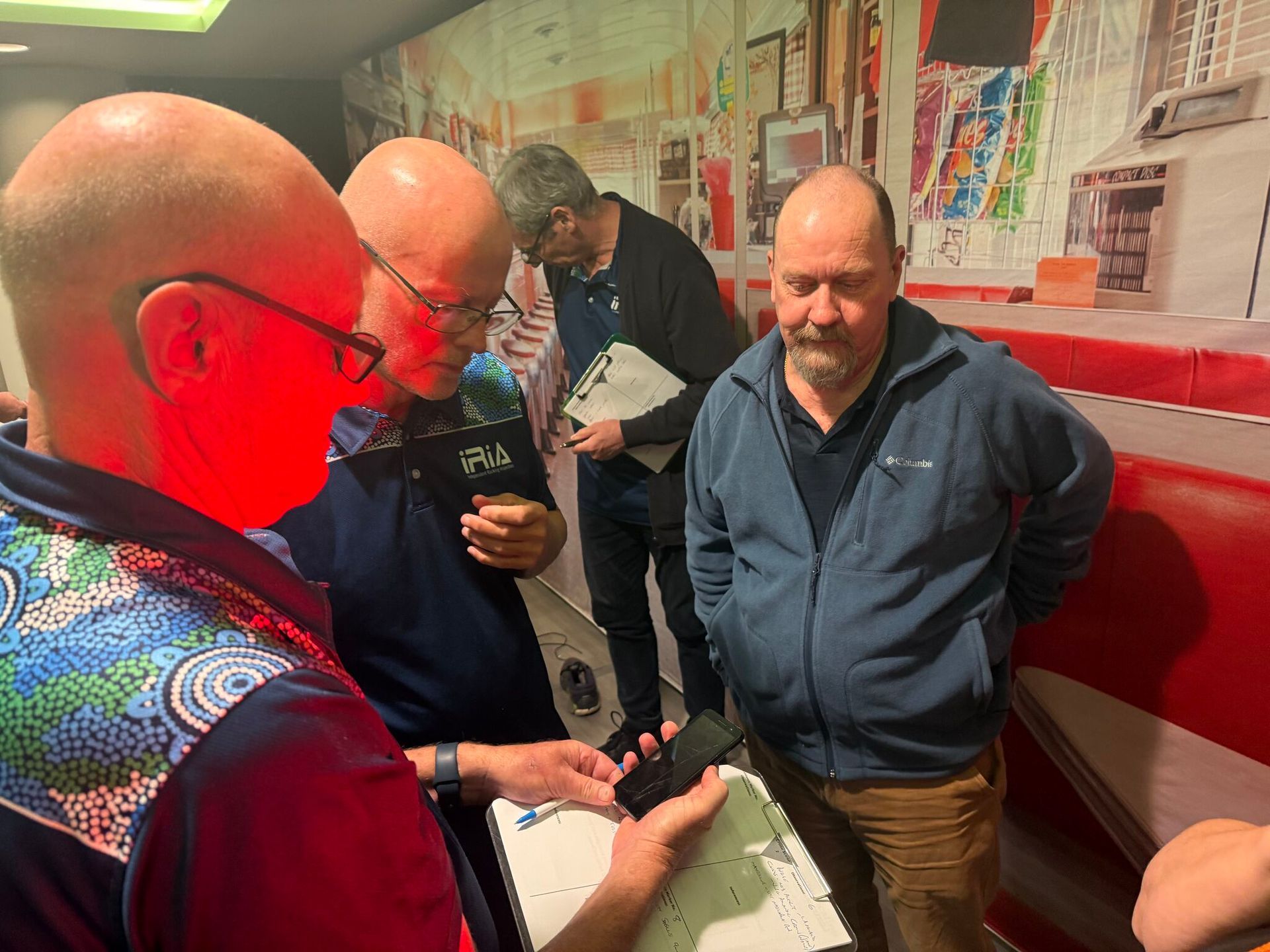
Investigative team building centres on problem-solving rather than performance. Teams receive a scenario, such as a simulated crime scene, requiring them to analyse information, share observations, test assumptions, and make decisions collectively.
The critical difference: success depends entirely on communication and collaboration. No one can "win" alone. No amount of individual brilliance compensates for poor teamwork.
How It Works in Practice
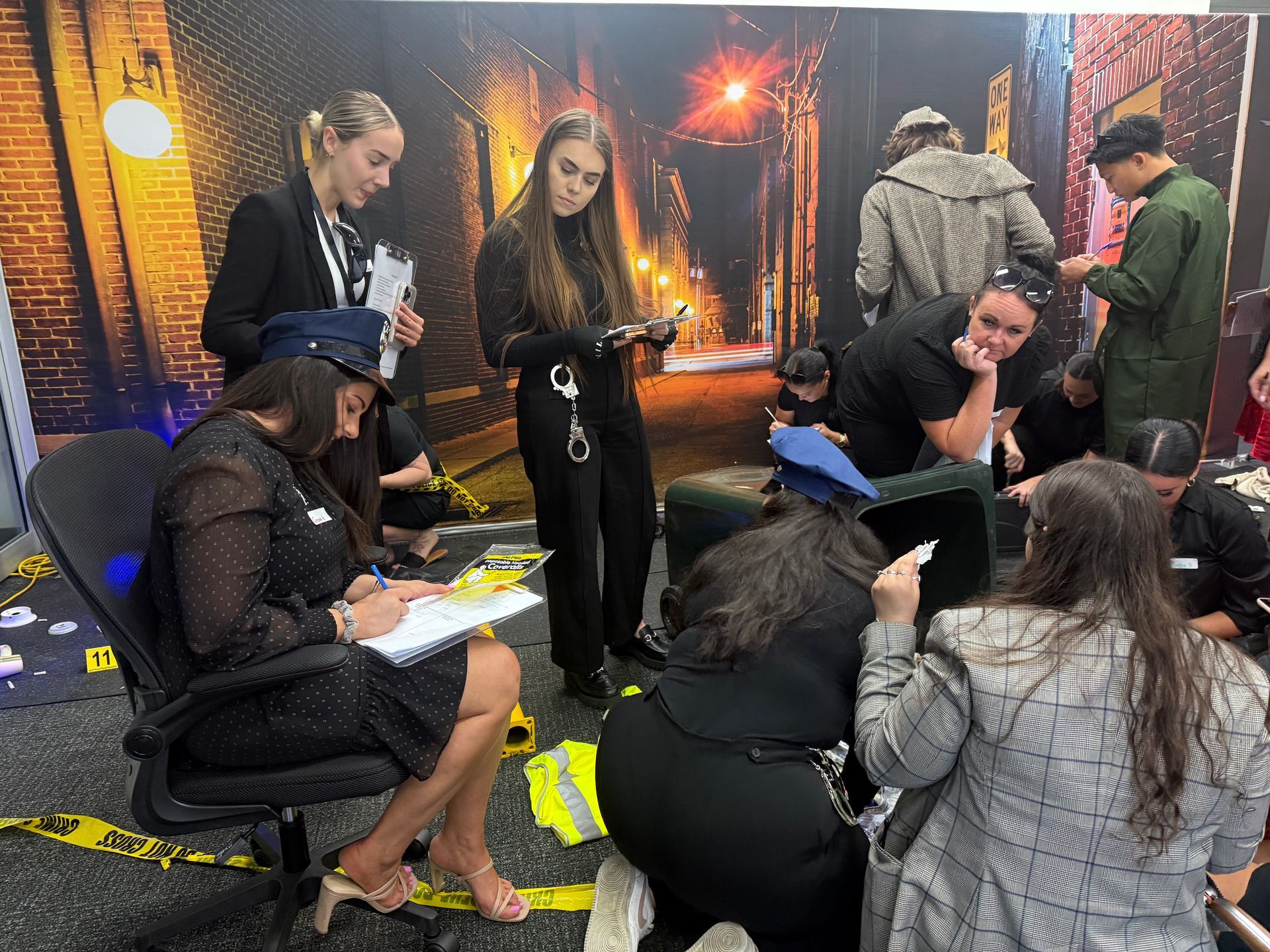
Teams arrive at a crime scene. Physical evidence is scattered. Witness statements contain contradictions. Time is limited.
To solve the case, teams must:
- Listen carefully to one another's observations
- Articulate findings clearly and precisely
- Question assumptions without dismissing colleagues
- Manage conflicting viewpoints constructively
- Coordinate tasks and roles organically
Because the scenario is unfamiliar and neutral, existing workplace hierarchies often soften. The executive who dominates strategy meetings might defer to the analyst who notices a crucial detail. The quiet team member who rarely speaks up might share the insight that unlocks the case.
New communication dynamics emerge naturally.
Why Crime Scenes Create Psychological Safety
Unlike workplace simulations where mistakes feel personal, investigative scenarios provide distance. Getting the "wrong" answer doesn't reflect on anyone's job performance. This psychological safety encourages:
- Risk-taking in contributions
- Challenging others' ideas without fear
- Admitting confusion or uncertainty
- Experimenting with new communication approaches
How Investigative Team Building Improves Real Workplace Communication
Investigative team building creates conditions that mirror workplace challenges without the stakes of real projects. This makes it particularly effective for identifying and improving communication patterns.
Teams Learn to Communicate with Precision
Vague language leads to mistakes quickly in crime scene investigations. "I think it was over there" or "Maybe around lunchtime" doesn't help solve a case.
Teams rapidly learn to be specific: "The broken glass is 2.3 metres from the door" or "The witness statement says 12:47 PM."
This precision transfers directly to workplace communication. After the workshop, team members catch themselves saying "Let's aim for Q2" and rephrase: "We need to deliver by March 15th."
Active Listening Becomes Essential, Not Optional
In investigations, success depends on understanding details shared by others. Missing information costs the team.
When Mark from accounting mentions a discrepancy in timestamps, and Sarah from operations builds on that observation to identify a pattern, the team experiences the value of active listening first-hand.
Teams witness what happens when people don't listen: clues get missed, work gets duplicated, and wrong conclusions emerge.
Collaboration Under Pressure Becomes the Default
Rather than defaulting to individual problem-solving, teams learn to rely on shared input. The scenario demands it.
Initially, teams might split up to tackle different aspects of the investigation independently. They quickly discover this approach fails. Information needs to be synthesised. Perspectives need to be compared. The team that communicates continuously outperforms the team of isolated experts.
This lesson reshapes how teams approach tight deadlines back at work.
Psychological Safety Strengthens Through Shared Challenge
External tasks create space for ideas, concerns, and challenges without the usual workplace dynamics. Junior team members feel comfortable questioning senior colleagues' interpretations. Different departments collaborate without territorial tension.
One finance team reported that their crime scene workshop was the first time in six months that the senior analyst admitted uncertainty about something. This single moment of vulnerability shifted the team's entire dynamic.
Why This Approach Resonates with HR and People Leaders
For HR and People and Culture professionals, investigative team building offers something many traditional activities lack: defensibility.
It positions clearly as:
- A communication development exercise grounded in observable behaviours
- A collaboration and problem-solving workshop with measurable outcomes
- A leadership and decision-making tool that reveals individual strengths
- An experiential learning activity aligned with adult learning principles
This framing makes it easier to justify internally, particularly when working with senior leadership or structured development programmes. It also aligns well with organisational values around professionalism, inclusion, and continuous improvement.
Inclusive by Design
Unlike physical team building activities, investigative workshops accommodate diverse abilities and working styles. Success comes from cognitive contribution, not physical capability.
The wheelchair user, the team member with anxiety around heights, and the colleague recovering from an injury all participate on equal footing.
Tangible Outcomes Beyond "Team Bonding"
HR can point to specific skills developed:
- Structured information sharing
- Evidence-based decision making
- Constructive disagreement management
- Clear role coordination
- Time-sensitive collaboration
These outcomes map directly to performance review criteria and professional development frameworks.
When Investigative Team Building Proves Most Effective
This approach delivers particular value during:
Organisational change: When restructures or new strategies create uncertainty, investigative workshops help teams rebuild trust and communication patterns in a neutral environment.
New team formation: Rather than waiting months for relationships to form organically, accelerate the process through shared challenge and achievement.
Leadership transitions: When new managers join, investigative team building reveals communication styles, decision-making approaches, and team dynamics quickly.
Communication or engagement challenges: When surveys reveal low engagement or communication issues, but the root cause remains unclear, watching how teams interact during investigations provides diagnostic insight.
Cross-department collaboration initiatives: When silos need breaking down, bringing different departments together for a crime scene investigation creates shared experience and mutual respect.
Rather than masking issues, investigative team building brings communication dynamics into focus in a constructive, facilitated way.
A More Meaningful Alternative to Traditional Team Building
For organisations seeking to genuinely improve how teams work together, investigative team building offers more than a shared experience. It provides insight into how teams communicate, collaborate, and make decisions under pressure.
For corporate teams experiencing communication challenges, crime scene team building offers a structured, engaging alternative that aligns with real workplace needs whilst delivering outcomes that extend beyond the activity itself.
A Flexible, On-Site Solution for Corporate Teams
Crime Story delivers crime scene team building workshops across major cities and regional centres, adapting each experience to suit the team, location, and objectives.
Whether used as part of a leadership offsite, a team reset, or a development initiative, the experience integrates seamlessly into professional environments. Scenarios can be customised to reflect specific organisational challenges, industry contexts, or learning objectives.
From boardrooms to conference centres, the workshop comes to your team no matter where you are in Australia, minimising logistical complexity whilst maximising impact.
Ready to transform how your team communicates? Get in touch with Crime Story to discuss how investigative team building can address your specific workplace challenges.
Educational Packages
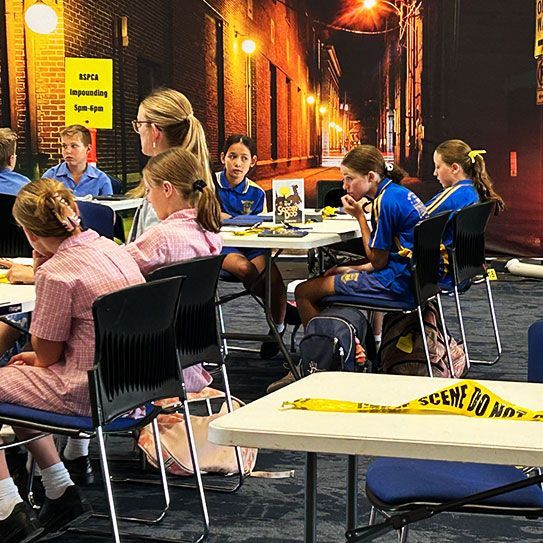
Unlock a world of discovery with our Educational Packages, where students collaborate with a former detective and experienced teacher to embark on captivating investigations aligned with essential syllabus elements. These interactive workshops not only spark curiosity but also enhance critical thinking and teamwork, offering students a chance to explore their interests in a dynamic learning environment. We provide workshops designed for schools anywhere in Australia. Dive into our diverse offerings below to find the perfect fit for your classroom.

Corporate Team Building
Transform your corporate team building experience with an engaging Crime Story Corporate Team Building Event. Whether for a small team or a large corporate retreat, our customised crime scene investigations encourage teamwork, problem-solving, and the development of essential soft skills in a fun, interactive environment. Forensic team building events bring your team closer together as they uncover clues and navigate through real-life mysteries, all while enhancing morale and building stronger connections.