
Have a Question?
Crime Story - Writing Unleashed: Years 7-11 Workshops
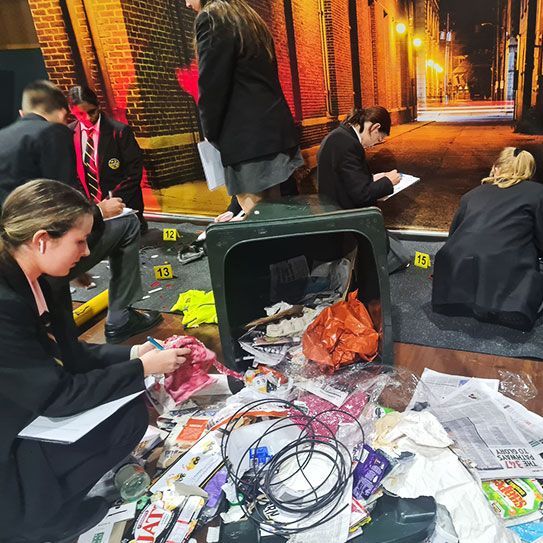
In the Crime Story - Writing Unleashed: Years 7-11 Workshops, students will dive into authentic crime scenes that encourage them to adopt a detective's mindset. Participants will develop skills in asking insightful questions, working collaboratively, and creating captivating narratives. These workshops are perfect for Crime Fiction and Power of Podcasting.
Transform Learning Through Engaging Storytelling Techniques and Immersive Experiences
Immerse your students in an engaging learning experience where they will learn to ask the right questions, work collaboratively or independently, and craft compelling narratives. Through our innovative techniques in deep imagery, engaging storytelling, and authentic dialogue, students will master the art of intrigue and storytelling.
Crime Story transforms narrative creation both in the classroom and beyond. Imagine students developing video games, comics, films, documentaries, or essays. Our workshops showcase how narratives shape various media, inspiring students to explore diverse storytelling forms.
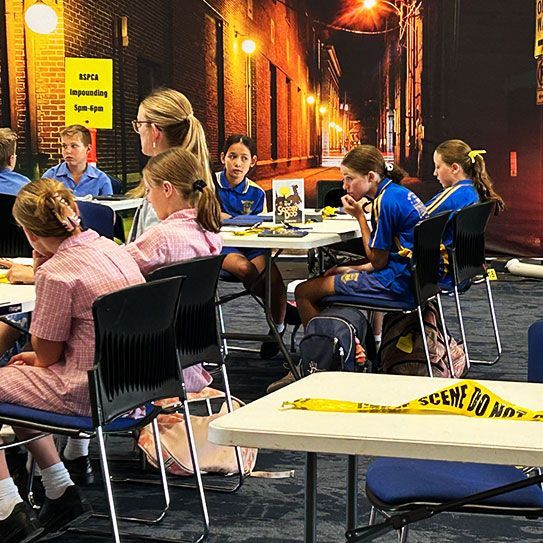
Workshop Highlights
Crime Scenes
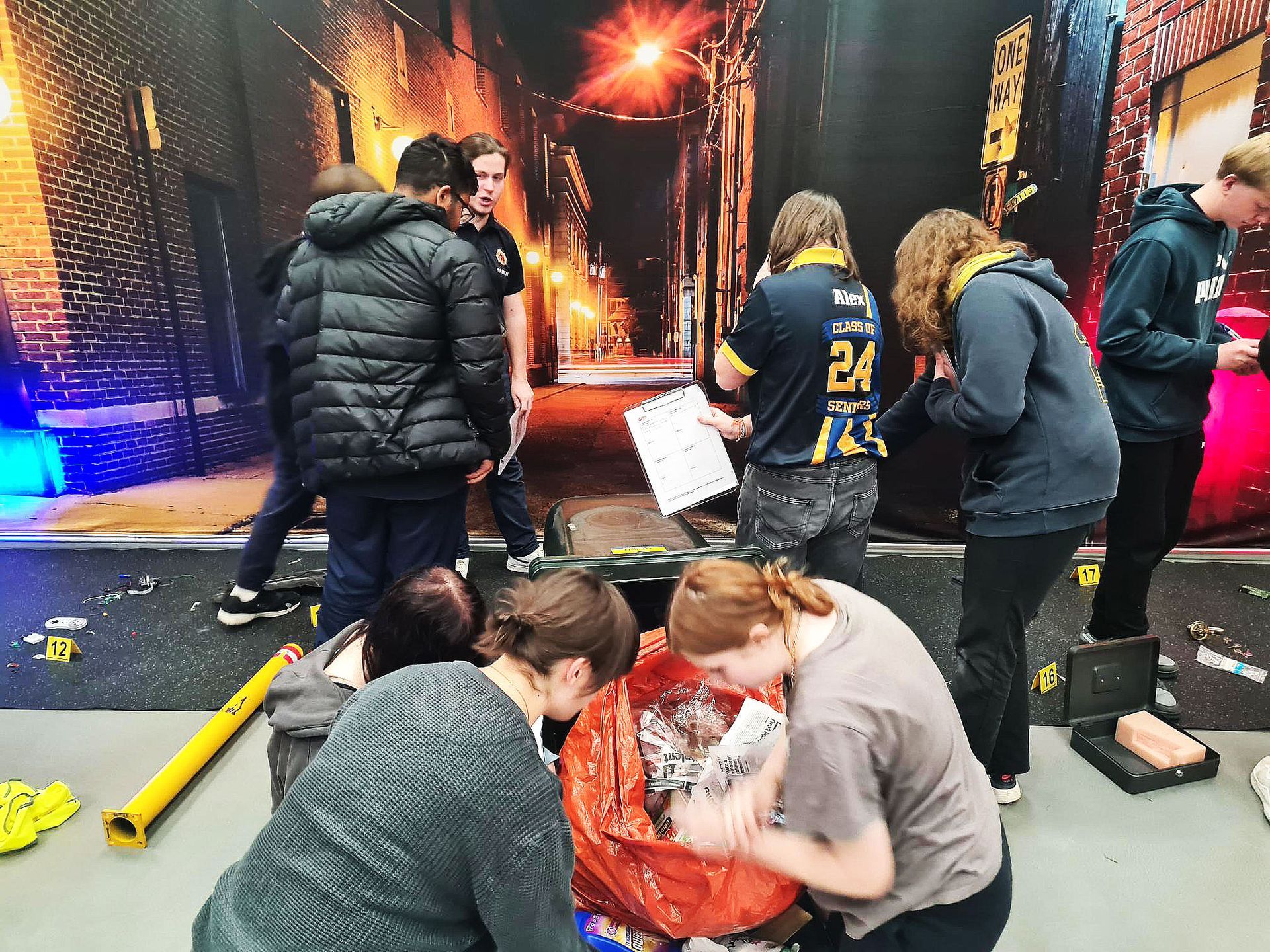
Two large digitally printed backdrops (6 x 2.25 metres each) set up with both real and simulated evidence.
Evidence
Students will examine items such as shell casings and DNA samples, learning to discern what constitutes evidence.
Forensic Tools
Authentic equipment used by law enforcement worldwide.
Workshop Structure
Pre-Session
- Setting up the day prior to workshop.
- Optional 1-hour Professional Development session on Experiential Learning.
- Equipping staff with facilitator material and prompt cards for the student experience.
- Pre-engagement material provided in the lead-up to event.
Session 1
Introduction to Crime Story: Control of writing, realistic expectations in writing, narrative frames, experiential sensory imagery, time compression, and authentic dialogue.
Procedural Narrative: Mastery of narrative techniques, including effective use of nouns, adjectives, and storytelling techniques.
Crime Scene Analysis: In-depth analysis of two crime scenes, applying narrative techniques to prescribed texts.
Medium/Text Adjustments: Adapting narratives for various media, including film, gaming, and documentaries.
Session 2
Structure:
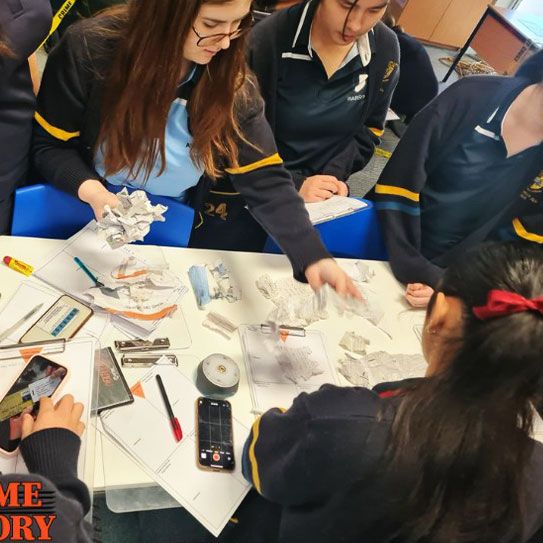
Overview and forensic tutorial (fingerprinting, DNA).
New Leads Zoom Session: A one-hour extension introducing new techniques and applying the crime scene metaphor to your teaching context.
Exam/Assessment Preparation
- Strategies to help students prepare for exams and assessments.
- Thematic changes
- Periodic updates to crime scenes and thematic elements.
Customised for Your Needs
Our workshops are tailored to fit your class size, cohort size, and specific school requirements. We align with curriculum outcomes and the NESA Rationale, focusing on:
Imaginative and Critical Thinking
Encouraging students to compose and respond with creativity and conviction.
Active and Independent Learning
Fostering lifelong learning and collaborative work.
Cultural Understanding
Broadening students perspectives on human experiences and social factors.
Moral and Ethical Values
Helping students develop a personal value system and articulate their ideals.
Outcomes and Rationale
Effective Text Response
Students will utilise diverse processes, skills, and strategies for responding to and composing texts across various media (EN4-2A).
Confident Communication
Development of critical thinking, problem-solving, and creative language use (EN4-5C).
What People Are Saying
Feedback from our students, educators and event organisers.
Join us in revolutionising the way your students learn through the captivating lens of Crime Story!
Why Choose Crime Story?
This Is About You
Learning is centred around inquiry, deeper questions, and problem-solving. Every subject invites questioning, offering multiple answers and unique perspectives. My aim is to teach in a way that encourages everyone to embrace their individuality and achieve their fullest potential, regardless of their perceived abilities.
Bringing Learning Opportunities to Everyone
We believe that everyone can succeed and deserves access to our programs. Based regionally, we prioritise equitable access for rural, coastal, and urban areas. Our mobile and flexible approach addresses the lack of learning opportunities outside major cities. We provide detailed feedback to schools and individuals, collaborating with your strengths and teaching methods to help you reach your goals.
Transferable Skills
How can you apply the skills you’ve learned in other areas? This focus on transferable skills is what makes Crime Story unique. We equip you with the tools to investigate life-sized crime scenes, pose your own questions, and utilise real forensic techniques like fingerprinting and DNA swabbing. Whether you’re building narratives or honing research and evaluation skills for writing, the possibilities are endless.